
Top Benefits of Using LiFePO₄ Lithium Batteries for Home Solar Systems
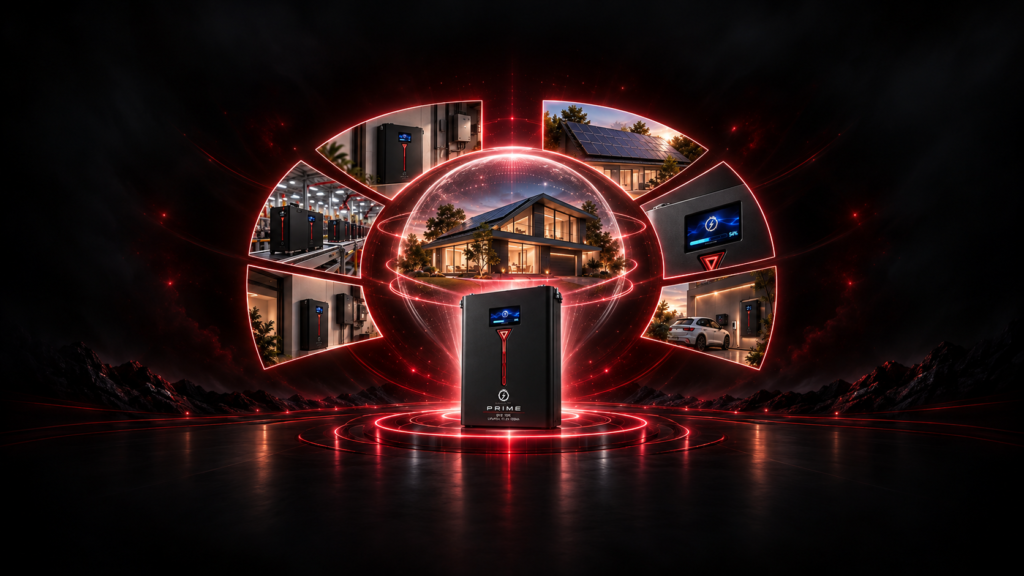
Top Benefits of LiFePO₄ Lithium Batteries for Home Solar Systems Discover the top benefits of LiFePO4 lithium batteries for home solar systems, including longer life, faster charging, better backup, BMS protection, high efficiency, and low maintenance. A reliable battery is the heart of any home solar system. Solar panels generate electricity during the day, but a battery determines how much of that energy can be stored and used later at night, during load-shedding, or when grid power is unavailable. For homeowners in Pakistan, LiFePO₄ lithium batteries have become one of the most popular choices for modern solar energy storage. Compared with traditional tubular or lead-acid batteries, LiFePO₄ batteries generally offer higher usable capacity, longer cycle life, faster charging, lower maintenance, and better compatibility with smart hybrid inverters. This guide explains the top benefits of using LiFePO₄ lithium batteries for home solar systems, what specifications matter, and why they are increasingly preferred for residential solar backup.What Is a LiFePO₄ Battery? LiFePO₄ stands for lithium iron phosphate, a lithium-ion battery chemistry widely used in stationary energy storage. For home solar systems, LiFePO₄ batteries are commonly available in configurations such as: A common residential configuration is a 51.2V 100Ah LiFePO₄ battery, which provides: 51.2V × 100Ah = 5.12kWh nominal energy This size is widely used with modern hybrid inverters for residential and small commercial solar systems. Current residential battery products in Pakistan commonly use the same 51.2V, 100Ah, 5.12kWh format. 1. Longer Battery Life One of the biggest advantages of a LiFePO₄ lithium battery for a home solar system is its long cycle life. A battery cycle generally means charging and then using an equivalent full amount of stored energy. Cycle life depends on: Many modern LiFePO₄ batteries are rated for thousands of cycles under specified test conditions. For example, current residential products in Pakistan commonly advertise around 6,000 cycles at controlled depth-of-discharge and temperature conditions. For homeowners who experience frequent load-shedding and use battery backup every day, longer cycle life can significantly reduce how often the battery needs to be replaced. 2. Higher Usable Battery Capacity Battery capacity is usually expressed in kilowatt-hours. However, the rated capacity and the usable capacity are not always the same. A LiFePO₄ battery can generally provide a greater portion of its rated capacity for regular use than a traditional lead-acid battery. For example, a modern residential 5.12kWh lithium battery may be specified for around 90% depth of discharge, providing roughly 4.6kWh of usable energy depending on the product. This means a homeowner can get more practical backup from the same nominal energy rating. That makes usable kWh one of the most important specifications to compare when buying a solar battery in Pakistan. 3. Faster Charging LiFePO₄ batteries can usually accept higher charging currents than traditional lead-acid batteries. This is particularly useful in solar systems because sunlight is available for a limited number of hours each day. Faster charging allows the battery to recover more quickly when: Current solar-market guides in Pakistan consistently identify faster charging as one of the main advantages of lithium over tubular batteries. 4. Better Solar Backup Performance A lithium battery helps store daytime solar generation for evening, nighttime, and outage use. This allows homeowners to use solar energy when the panels are no longer producing electricity. Depending on battery size and connected load, a home solar battery can support: The amount of backup depends on the usable battery capacity and the actual load. A properly sized lithium battery can therefore make a solar system much more useful during load-shedding. 5. Intelligent Battery Management System Most modern LiFePO₄ batteries include an integrated Battery Management System, or BMS. The BMS monitors and manages battery operation. Typical BMS functions may include: This intelligent monitoring helps keep the battery within its designed operating limits. Many modern residential batteries also support communication with hybrid inverters through CAN or RS485. 6. Better Inverter Communication One of the strongest advantages of modern lithium battery systems is direct communication with compatible solar inverters. Common communication interfaces include: This allows the battery to share information such as: This can improve system control and reduce the need to rely only on voltage-based battery estimates. When buying a lithium battery for a solar inverter, compatibility should always be confirmed before installation. 7. Lower Maintenance LiFePO₄ batteries generally require far less routine maintenance than flooded lead-acid or tubular batteries. They normally do not require: This makes lithium batteries more convenient for residential installations. Current Pakistan solar-market comparisons commonly highlight maintenance-free operation as a major reason homeowners are shifting from tubular batteries to LiFePO₄. 8. Compact and Space-Saving Design Lithium batteries generally provide more usable energy in a smaller physical footprint than an equivalent lead-acid battery bank. This is valuable for modern homes where installation space may be limited. Many LiFePO₄ batteries are designed as: A neat battery installation is easier to integrate into a garage, utility room, technical area, or solar equipment room. 9. Lower Weight Lead-acid batteries are heavy because of their internal lead plates and electrolyte. LiFePO₄ batteries generally provide better energy density, which reduces the amount of weight required for the same usable energy storage. Lower weight helps with: This can significantly simplify residential solar installation. 10. Higher Energy Efficiency All batteries lose some energy during charging and discharging. LiFePO₄ batteries generally offer high round-trip efficiency compared with traditional lead-acid technologies. That means more of the solar energy stored in the battery can later be recovered and used. Current Pakistan solar guides often quote lithium round-trip efficiencies around the mid-90% range for quality systems, though actual performance depends on the complete installation. Higher efficiency means: 11. Better Solar Self-Consumption Solar self-consumption means using more of the energy generated by your own solar panels. Without a battery, excess solar power generated during the day may be exported or unavailable later. With a LiFePO₄ home solar battery, that electricity can be stored and used: This allows homeowners to depend less on grid electricity. 12. Strong Performance for Daily Cycling Many homes in
How to Choose the Right Lithium Battery for Your Solar Inverter

How to Choose the Right Lithium Battery for Your Solar Inverter | Complete Guide Learn how to choose the right lithium battery for your solar inverter. Compare LiFePO4 battery voltage, capacity, BMS, CAN/RS485 communication, charge current, backup time, and inverter compatibility. Choosing the right lithium battery for your solar inverter is one of the most important decisions in a modern solar system. A battery may have excellent specifications, but if its voltage, current limits, communication protocol, or capacity do not match the inverter, the system may not perform correctly. For homeowners, businesses, installers, and EPC companies in Pakistan, LiFePO₄ lithium batteries are increasingly preferred for hybrid solar systems because they offer high usable capacity, long cycle life, fast charging, low maintenance, and intelligent Battery Management System integration. This guide explains how to choose the best lithium battery for a solar inverter, how to check compatibility, how to size the battery correctly, and which specifications matter most before installation. Why Battery and Inverter Compatibility Matters A solar inverter and lithium battery must work together as one system. The inverter controls how energy moves between: The battery stores energy and communicates its operating limits to the inverter. If the two devices are not compatible, the system may experience: This is why you should never choose a lithium battery for a solar inverter based only on battery capacity or price. 1. Check the Inverter Battery Voltage First The first step is to confirm the DC battery voltage required by your inverter. Common battery-voltage classes include: Many modern residential hybrid inverters use a 48V-class battery system. LiFePO₄ batteries commonly use 51.2V nominal voltage in this category. A typical residential lithium battery configuration is: 51.2V × 100Ah = 5.12kWh Current residential lithium battery products use this exact 51.2V, 100Ah, 5.12kWh configuration for modern home energy-storage systems. Before buying the battery, confirm the inverter’s supported battery-voltage range. 2. Understand Nominal Voltage vs Operating Voltage A 51.2V LiFePO₄ battery does not remain at exactly 51.2V while operating. Battery voltage changes depending on: Your inverter must support the battery’s full operating-voltage range, not just the nominal value. This is why it is important to compare: Battery minimum voltage → inverter battery input range and: Battery maximum charging voltage → inverter charging capability Never assume that all 48V lithium batteries are interchangeable. 3. Choose the Correct Battery Capacity Battery capacity determines how much energy can be stored. For solar applications, capacity is best compared in kilowatt-hours (kWh) rather than amp-hours alone. For example: 51.2V 100Ah Battery 51.2 × 100 = 5,120Wh = 5.12kWh 51.2V 200Ah Battery 51.2 × 200 = 10,240Wh = 10.24kWh The right battery capacity depends on: A larger inverter does not automatically require a larger battery in kWh, but the battery must still support the inverter’s current demand. 4. Calculate Your Required Backup Time Before choosing a lithium battery for a home solar system, estimate the load you want to run during an outage. Example essential load: Total: 900W Suppose a 5.12kWh battery provides approximately 4.6kWh of usable energy. Estimated backup: 4.6kWh ÷ 0.9kW ≈ 5.1 hours Actual backup will vary because of: Use this calculation as a sizing estimate, not a guaranteed backup duration. 5. Check Maximum Battery Discharge Current This is one of the most important and commonly overlooked specifications. A battery may have enough energy capacity but still be unable to deliver enough power for a large inverter. For example: A 51.2V battery with a 100A continuous discharge limit can theoretically provide approximately: 51.2V × 100A = 5.12kW DC Actual usable AC power will be somewhat lower because of inverter losses. If you connect a much larger inverter and try to operate heavy loads, the battery BMS may trigger over-current protection. Victron’s lithium integration guidance specifically warns that battery banks must be sized according to inverter power and peak-current requirements; otherwise the battery can be overloaded and trip. 6. Check Maximum Charging Current Battery charge current is equally important. Your inverter or solar charge controller should not charge the battery above its permitted charging current. Suppose a battery is rated for: Maximum charge current: 50A At approximately 51.2V: 51.2 × 50 = 2.56kW This gives an approximate charging-power limit. If the solar array and inverter can deliver much more charging power than the battery accepts, the inverter must be configured to limit battery charging. Victron documentation notes that an undersized battery bank connected to large charging equipment can exceed the battery’s operating current limits and trigger BMS protection. 7. Look for CAN or RS485 Communication Modern lithium batteries can communicate directly with compatible hybrid inverters. The two most common communication interfaces are: Through communication, the battery BMS can share information such as: Current residential batteries frequently provide both CAN and RS485 interfaces. This communication is one of the biggest advantages of using a modern LiFePO₄ battery with a solar inverter. 8. Confirm the Communication Protocol, Not Just the Port Two products having CAN ports does not automatically mean they are compatible. The battery and inverter must use a compatible communication protocol. This distinction is extremely important. For example, documentation for lithium battery integrations lists different inverter configurations and battery protocols for brands such as Victron, Growatt, GoodWe, Deye, Sunsynk, and LuxPower. Therefore, before purchasing: 9. Use the Correct Communication Cable Even if both devices support the same communication protocol, the cable pinout may differ. A normal Ethernet cable is not always suitable. Battery communication cables may use RJ45 connectors but assign pins differently for: For example, one LiFePO₄ battery manual assigns specific RJ45 pins for both CAN and RS485 communication. Always use the approved communication cable or verified pinout. Incorrect communication wiring can prevent inverter-battery communication even when both devices are technically compatible. 10. Check the Battery Management System A quality BMS lithium battery is essential for a solar inverter system. The BMS monitors the battery and helps protect it from abnormal conditions. Typical functions include: In closed-loop systems, the BMS can also dynamically communicate charging and discharging limits to the inverter.