
Best Lithium Battery for Solar Systems in Pakistan | Complete 2026 Guide
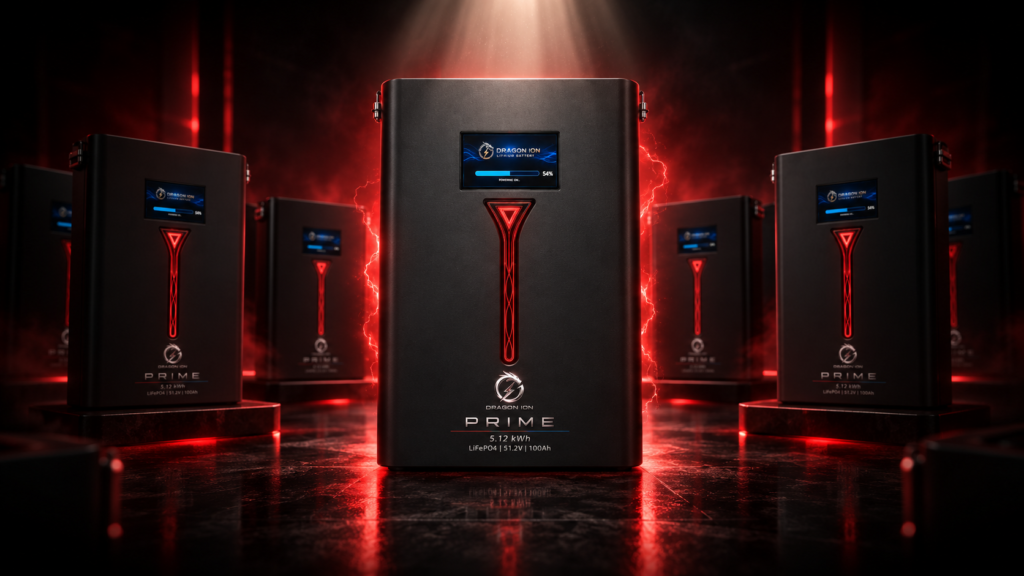
Looking for the best lithium battery for solar systems in Pakistan? Learn about LiFePO4 batteries, capacity, BMS, inverter compatibility, backup time, pricing, and key buying factors. Why Lithium Batteries Are Becoming Popular for Solar Systems in Pakistan Pakistan’s solar market has expanded significantly, and battery storage is becoming an important part of hybrid and off-grid solar systems. Traditional lead-acid and tubular batteries remain available, but many solar users are shifting toward LiFePO₄ lithium batteries because they can offer greater usable storage, lower maintenance requirements, compact designs, and better suitability for repeated charge and discharge cycles. Current Pakistani solar-market guides increasingly focus on 48V and 51.2V LiFePO₄ batteries for residential solar installations, particularly systems requiring regular backup. Energy storage also allows solar electricity produced during the day to be shifted to evening and nighttime use, which is one of the main benefits of combining solar PV with battery storage. What Is a LiFePO₄ Lithium Battery? LiFePO₄, or lithium iron phosphate, is a type of lithium-ion battery chemistry commonly used for stationary energy storage. Unlike conventional batteries that depend on liquid electrolyte maintenance and frequent servicing, a properly designed LiFePO₄ battery can operate as a largely maintenance-free energy-storage solution. For solar systems, LiFePO₄ batteries are commonly available in capacities such as: A popular residential configuration is a 51.2 V 100 Ah lithium battery, which provides approximately: 51.2V × 100Ah = 5.12 kWh nominal energy That makes the 5.12kWh lithium battery particularly suitable for many hybrid solar installations. Why LiFePO₄ Is Suitable for Solar Energy Storage Several characteristics make LiFePO₄ attractive for solar applications. Long-Term Energy Storage Solar batteries regularly charge during periods of available solar generation and discharge when electricity is required. A battery chemistry designed for repeated cycling is therefore important. LiFePO₄ technology is widely used in stationary storage, and public-sector technical specifications in Pakistan have also called for LiFePO₄ batteries with integrated BMS protection for renewable-energy applications. High Usable Battery Capacity Traditional lead-acid batteries are often operated conservatively to reduce excessive degradation. Lithium batteries generally allow a greater portion of their rated capacity to be used, although the exact recommended depth of discharge depends on the manufacturer. This means buyers should compare usable energy in kWh, not only the Ah rating printed on the battery. Low Maintenance A lithium battery does not normally require routine water topping like traditional flooded lead-acid batteries. For homeowners, offices, shops, and commercial facilities, this can simplify long-term battery ownership. Integrated Battery Management System A quality lithium battery for solar systems should contain a Battery Management System, commonly known as a BMS. A BMS may monitor or protect against conditions such as: The exact protection functions vary by battery model. How to Choose the Best Lithium Battery for Solar Systems in Pakistan The best battery is not necessarily the battery with the highest capacity or lowest price. It should match the solar system, inverter, household load, backup requirement, and installation environment. Here are the most important factors. 1. Choose the Correct Battery Capacity Battery capacity is normally expressed in kWh. A battery with greater kWh capacity can store more energy. For example: Battery Configuration Nominal Energy 25.6V 100Ah 2.56 kWh 51.2V 100Ah 5.12 kWh 51.2V 200Ah 10.24 kWh For most buyers, comparing batteries by kWh is more useful than comparing Ah alone. A 100Ah battery at 12V contains far less energy than a 100Ah battery at 51.2V. 2. Calculate Your Required Backup Time Before purchasing a home solar battery in Pakistan, calculate how much load you want the battery to support. Suppose your essential appliances consume approximately: Total average load: 1,000W or 1kW A 5.12kWh battery theoretically contains 5.12kWh of nominal energy. However, actual backup time will be affected by: Therefore, battery sizing should always include a reasonable safety margin. 3. Check Battery Voltage Modern hybrid solar systems commonly use batteries in the 48V or 51.2V range. A 51.2V lithium battery is commonly created using LiFePO₄ cells arranged to provide the required nominal system voltage. Before purchasing a battery, confirm that your inverter supports the battery’s voltage range. Never assume that every lithium battery will work with every solar inverter. 4. Confirm Inverter Compatibility This is one of the most important points when choosing the best lithium battery for solar inverter systems. The battery and inverter need to be compatible: Many modern lithium batteries communicate with hybrid inverters using interfaces such as: CAN or RS485 Proper communication allows the inverter to receive battery information such as: Always verify compatibility before installation. 5. Look for an Intelligent BMS A lithium battery without a properly designed Battery Management System should not be evaluated only on price. The BMS is one of the most important components in a modern solar lithium battery. It monitors individual cells and helps keep the battery operating within safe electrical limits. A good BMS can significantly improve system control, reliability, and protection. 6. Check the Battery Chemistry Not every product marketed as a “lithium battery” uses the same chemistry. For stationary solar energy storage, LiFePO₄ batteries are widely used. NREL notes that lithium iron phosphate became a major chemistry for stationary battery storage applications. When comparing batteries, look for the chemistry clearly stated on the technical datasheet. Search specifically for: LiFePO4 battery Pakistan rather than evaluating products only under the broad term “lithium-ion battery.” 7. Examine Charging and Discharging Current Battery capacity alone does not tell you how much instantaneous power a battery can supply. You should also check: These values matter when powering larger loads such as: A battery must be able to safely support the inverter and connected load. 8. Consider Cycle Life Carefully Cycle life indicates how many charge and discharge cycles a battery is designed to complete under specified test conditions before reaching a defined remaining capacity. However, buyers should avoid comparing cycle-life numbers without checking the conditions. Cycle life can depend on: Battery lifespan is therefore not determined by one number alone. 9. Consider Pakistan’s Temperature Conditions Pakistan experiences high temperatures in many regions during summer. Battery
LiFePO₄ Battery vs Lead-Acid Battery: Which Is Better for Solar Energy Storage?
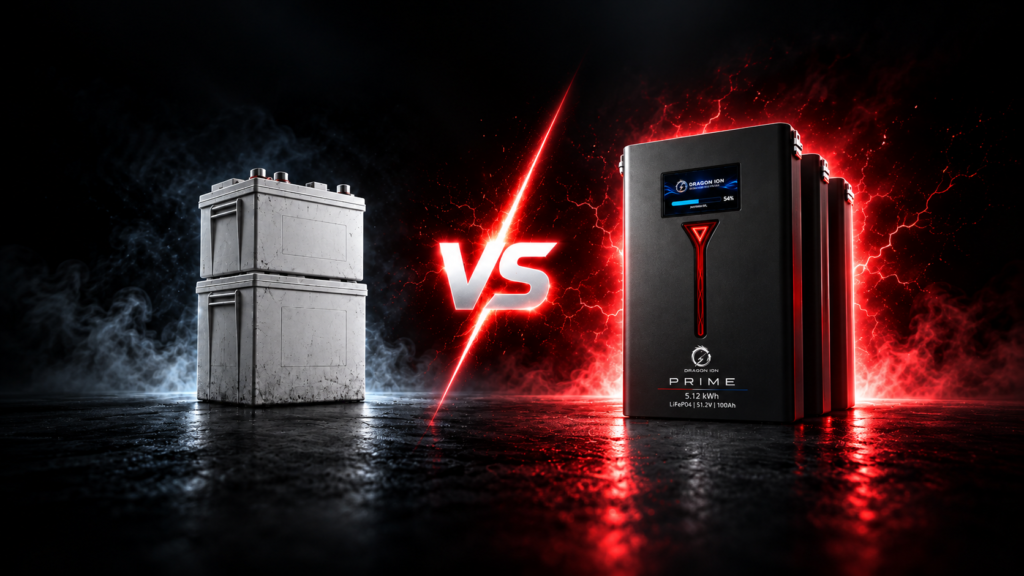
LiFePO₄ Battery vs Lead-Acid Battery for Solar Energy Storage | Complete Guide Compare LiFePO₄ battery vs lead-acid battery for solar systems. Learn about cycle life, backup time, charging speed, maintenance, cost, efficiency, and the best solar battery for Pakistan. What Is a LiFePO₄ Battery? A LiFePO₄ battery, or lithium iron phosphate battery, is a type of lithium-ion battery widely used in modern solar energy storage systems. LiFePO₄ batteries are designed for repeated charging and discharging and are commonly available in configurations such as: A common residential configuration is a 51.2V 100Ah lithium battery, which provides approximately: 51.2V × 100Ah = 5.12kWh nominal energy LiFePO₄ chemistry has become a major choice for stationary energy storage because it offers strong cycling performance and is well suited to repeated charge-and-discharge operation. What Is a Lead-Acid Battery? A lead-acid battery is an older and widely used battery technology. Lead-acid batteries are available in several types, including: For solar systems in Pakistan, tubular batteries are among the most common lead-acid options because they are designed for deeper discharge than ordinary automotive batteries. Lead-acid batteries remain popular mainly because of their lower upfront purchase price and wide availability. LiFePO₄ Battery vs Lead-Acid Battery: Quick Comparison Feature LiFePO₄ Battery Lead-Acid Battery Upfront Cost Higher Lower Usable Capacity Generally higher Generally lower Cycle Life Longer Shorter Maintenance Low May require maintenance Charging Speed Faster Slower Weight Lower per usable kWh Heavier BMS Usually integrated Usually not Solar Compatibility Excellent Good Daily Cycling Well suited More demanding Depth of Discharge Typically higher Usually more limited Expansion Often modular Possible but less convenient Long-Term Cost Often lower Can be higher due to replacements Pakistani market comparisons currently show lithium batteries carrying a higher initial price, while tubular lead-acid batteries remain attractive where upfront budget is the primary constraint. 1. Usable Battery Capacity One of the biggest differences between LiFePO₄ batteries and lead-acid batteries is how much of the rated capacity can practically be used. Suppose you have a battery rated at 5kWh. The full 5kWh rating does not necessarily mean you should discharge all 5kWh every day. A lithium battery may support a significantly higher recommended depth of discharge than many lead-acid batteries. This means that two batteries with similar nameplate capacity can provide very different amounts of usable energy. For buyers comparing a solar battery in Pakistan, usable kWh is often more important than the Ah rating alone. 2. Depth of Discharge Depth of discharge, commonly called DoD, indicates how much of a battery’s stored energy has been used. For example: LiFePO₄ batteries are generally designed to tolerate deeper discharge more effectively than traditional lead-acid batteries. Lead-acid batteries are often operated at shallower discharge levels to reduce accelerated degradation. This difference can make lithium systems more practical for daily solar cycling. 3. Cycle Life Cycle life is one of the strongest advantages of LiFePO₄ battery technology. A cycle generally refers to one equivalent full charge and discharge. Battery cycle life depends on: Published cycle claims vary substantially between manufacturers, so cycle-life numbers should always be checked against the test conditions. Current Pakistan-market comparisons often list LiFePO₄ batteries with several thousand rated cycles, while tubular lead-acid products generally show considerably lower cycle counts. For users experiencing frequent load-shedding or daily solar battery cycling, cycle life can have a major effect on long-term cost. 4. Charging Speed Solar energy is available for a limited number of hours each day. A battery that can accept charge efficiently during available sunlight can therefore make better use of the solar system. LiFePO₄ batteries typically support higher charging rates than traditional lead-acid batteries. This can be particularly useful when: Lead-acid batteries generally require more conservative charging profiles. 5. Battery Management System Most modern LiFePO₄ batteries for solar systems include a Battery Management System, or BMS. The BMS may monitor: It may also provide protection against: Lead-acid batteries normally do not contain this type of integrated intelligent battery management. This gives lithium systems an advantage in monitoring and system integration. 6. Maintenance Requirements One of the biggest practical benefits of LiFePO₄ batteries is low maintenance. A properly installed lithium battery normally does not require: Flooded lead-acid and some tubular batteries may require periodic maintenance. For homes, offices, shops, and commercial installations, low maintenance can be a major convenience. 7. Weight and Installation Space Lead-acid batteries are heavy. A large battery bank can require: LiFePO₄ batteries generally provide more usable energy per unit of weight and volume. This makes wall-mounted and compact battery installations possible. For modern residential solar systems, this can significantly improve installation flexibility. 8. Solar Inverter Compatibility Modern lithium batteries can communicate directly with compatible hybrid inverters. Typical communication protocols include: Communication can allow the inverter to receive information such as: This can make system management more intelligent. Lead-acid batteries are usually configured through fixed charging-voltage settings rather than digital communication. 9. Battery Efficiency Battery efficiency describes how much of the energy used to charge a battery can later be recovered. All batteries lose some energy during charging and discharging. LiFePO₄ batteries generally have lower energy losses than many lead-acid systems. Higher efficiency is useful because more of the solar energy generated during the day remains available for later use. This is particularly important where solar generation is limited or electricity demand is high. 10. Backup Time Backup time depends primarily on: A lithium battery may provide longer practical backup than a similarly rated lead-acid battery because more of its capacity can often be used. For example, a 5.12kWh LiFePO₄ battery may offer substantially more usable storage than a lead-acid bank with the same nominal energy rating if the lead-acid bank is being operated at a more conservative depth of discharge. 11. Performance During Daily Load-Shedding Pakistan’s solar market often involves batteries being used every day. Daily load-shedding means a battery can experience frequent charging and discharging. This is where LiFePO₄ technology tends to be particularly attractive. Recent Pakistan-market guides identify lithium as the preferred choice for regular daily cycling, while tubular lead-acid
How Lithium Batteries Improve Solar Backup and Energy Efficiency

How Lithium Batteries Improve Solar Backup & Energy Efficiency | Complete Guide Discover how lithium batteries improve solar backup, energy efficiency and solar self-consumption. Learn about LiFePO4 batteries, BMS, charging speed, backup time and energy storage for solar systems in Pakistan. Solar energy is most valuable when the electricity generated during the day can also be used after sunset, during load-shedding, or whenever grid power is unavailable. That is why lithium batteries for solar systems have become an important part of modern residential and commercial energy storage. A well-designed LiFePO₄ lithium battery does more than provide backup power. It can improve solar self-consumption, reduce wasted solar generation, support faster charging, provide more usable battery capacity, and help create a more efficient energy-management system. For homeowners and businesses in Pakistan, this is particularly important because solar systems are increasingly being designed not only to generate electricity, but also to provide dependable backup during outages. This guide explains how lithium batteries improve solar backup and energy efficiency, what specifications matter most, and how to choose the right lithium battery for a solar system. Why Solar Systems Need Battery Storage Solar panels generate electricity when sunlight is available, but household and commercial electricity demand does not always match solar production. A typical solar system may produce its strongest output around midday, while electricity consumption can remain high in the evening. Without a battery, surplus solar energy may not be available when the user actually needs it. A solar battery storage system solves this problem by storing electricity and releasing it later. The U.S. Department of Energy notes that storage allows solar energy to be used at different times from when it was generated and can improve system resilience, power quality, and the matching of electricity supply with demand. This is the basic reason lithium batteries can significantly improve the usefulness of a solar installation. What Is a Lithium Battery for Solar Systems? A lithium battery for solar systems stores electricity produced by solar panels so that it can be used later. Modern stationary solar batteries commonly use LiFePO₄, or lithium iron phosphate, chemistry. LiFePO₄ has become particularly important for stationary energy storage. According to the International Energy Agency, LFP batteries accounted for around 90% of battery-storage deployments in 2025, reflecting their suitability for frequent cycling and stationary energy-storage applications. Common lithium battery configurations for solar systems include: For many modern hybrid solar systems, a 51.2V 100Ah LiFePO₄ battery is a common configuration. Its nominal energy capacity is: 51.2V × 100Ah = 5.12kWh 1. Lithium Batteries Store Excess Solar Energy The first major advantage of a lithium battery is simple: it allows solar electricity generated during the day to be stored for later use. For example, a solar system may generate more electricity than a home needs between 10:00 AM and 3:00 PM. Instead of losing access to that surplus generation, a battery can store it. The stored energy can then be used: This process improves solar self-consumption, meaning more of the energy produced by the solar system is actually used by the property. Battery storage is increasingly important globally because it allows renewable generation to be shifted from periods of production to periods of higher demand. 2. Lithium Batteries Improve Solar Backup A solar system without battery storage does not automatically guarantee backup during a grid outage. In many grid-connected solar installations, the inverter may shut down when utility power fails unless a compatible battery backup system is installed. A lithium battery backup system provides stored energy that can keep selected loads operating when the grid stops. Depending on battery size and inverter capacity, backup loads may include: For commercial systems, battery backup may also support: The IEA notes that battery storage can strengthen electricity security and provide critical backup during outages and emergencies. 3. More Usable Energy Means Better Backup One of the biggest advantages of LiFePO₄ batteries is their ability to provide a high proportion of their rated energy capacity for regular use. Battery capacity is usually expressed in kilowatt-hours. For example: 5.12kWh nominal capacity does not always mean that the full 5.12kWh should be discharged every day. The usable portion depends on: LiFePO₄ batteries generally support deeper regular discharge than traditional lead-acid batteries. That means a lithium battery can often provide more practical backup from the same nominal storage capacity. 4. Higher Efficiency Reduces Energy Losses Every battery loses some energy while charging and discharging. The important factor is how much stored energy can be recovered afterward. Lithium battery systems can achieve high round-trip efficiency. For example, NREL models utility-scale lithium-ion solar-plus-storage systems with round-trip efficiencies in the high-80% range, depending on system configuration. The exact efficiency of a residential battery depends on the product, inverter, wiring, temperature, and system architecture. Higher battery efficiency means: This is why solar energy efficiency should be evaluated at the complete system level rather than by solar-panel efficiency alone. 5. Faster Charging Makes Better Use of Solar Hours Solar generation is limited to daylight hours. Clouds, haze, dust, weather, seasonal changes, and shading can reduce the amount of time available for strong solar production. A battery that can charge efficiently at higher rates can capture available solar energy more effectively. LiFePO₄ batteries generally support higher charging rates than traditional lead-acid batteries when used within their approved specifications. Faster charging can be useful when: This helps the battery recover its state of charge sooner and improves backup readiness. 6. Smart BMS Improves Battery Management A modern LiFePO₄ solar battery normally includes a Battery Management System. The BMS is one of the most important components of a lithium battery. It may monitor: Depending on the battery design, the BMS may protect against: This intelligent monitoring helps the battery operate within its designed limits. 7. Lithium Batteries Can Communicate With Hybrid Inverters Modern battery storage is becoming increasingly intelligent. Many lithium batteries for solar inverters support communication protocols such as: With compatible communication, the battery can send information to the inverter. This may include: This communication